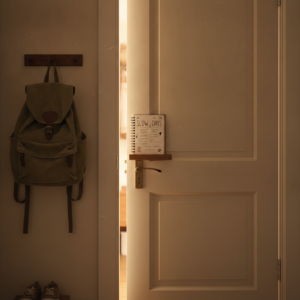
For a while, bedtime in our house was the last negotiation of a day that had already been full of them. Three kids, three different ideas about what “almost ready” meant, and me repeating myself until my voice gave out. The thing that actually helped wasn’t a new bribe or a stricter deadline. It was one rule: the same steps, in the same order, every single night, no exceptions for how the day went.
Why the Order Matters More Than the Time
Kids don’t argue with a routine the way they argue with a decision. If the order never changes, there’s nothing to negotiate – it’s not a choice I’m making in the moment, it’s just what happens next. That predictability did more for us than any consequence I threatened.
Consequences That Match, Not Punishments That Don’t
The same principle that got a thrown block bin taken away applies here – if stalling delays the routine, the routine just runs later, and something they wanted at the end of it (a longer story, more time with the light on) gets shorter. Nothing unrelated gets pulled in.
Where the Sticker Chart Failed Us
We tried charting bedtime compliance once. It worked for about a week, same as every other sticker chart we’ve attempted, then quietly died. The routine outlasted it because the routine didn’t depend on anyone staying excited about stickers.
My husband and I split the routine now – he handles part of it, I handle the rest – and having it fixed instead of improvised most nights is what actually keeps it from turning into a fight.
The full breakdown of how we set the order and what to say when someone tries to stall it is in The Positive Discipline Quick-Start Guide.
More routines like this one live at our Parenting hub.