Somewhere around age seven, my son started correcting my instructions before I’d even finished giving them. “I know, I know, you already told me that part,” he’d say, halfway through a math explanation he’d apparently already figured out on his own. It stung a little as a teacher, and then I realized it was exactly what was supposed to happen at this stage.
Ages 6-8 is where a lot of the hand-holding from the early years is supposed to start loosening, and figuring out how much to let go — and when — turned out to be the real curriculum of this stage, more than any subject.
The Day I Stopped Sitting Next to Him
Up through kindergarten, I sat beside my kids for nearly everything. At six and seven, I started giving one instruction, then walking away to fold laundry in the next room, checking in every few minutes instead of hovering the whole time. The work got messier for about two weeks. Then it got more confident, in a way that sitting beside him for another year never would have produced.
Independent Doesn’t Mean Unsupervised
I want to be honest about what “independent work” actually looked like at this age: short bursts, ten to fifteen minutes at most, with me nearby but not hovering. A seven-year-old left completely alone with a stack of worksheets for an hour isn’t building independence — they’re usually just drifting off task. The skill I was actually building was independence in short, supported doses.
Letting Mistakes Sit Uncorrected
The hardest habit to break was correcting errors the moment I saw them. I started waiting until my son finished a full page before going over it together, instead of catching every mistake in real time. He caught almost half of his own errors just by reviewing his own work — a skill he never had the chance to build when I corrected him mid-sentence.
What Actually Changed in Our Rhythm
- Morning check-in together, then one block of solo work while I’m nearby but occupied with something else.
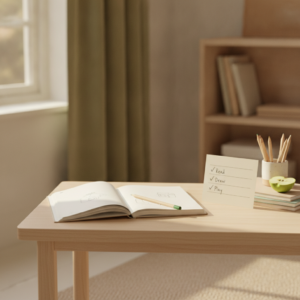
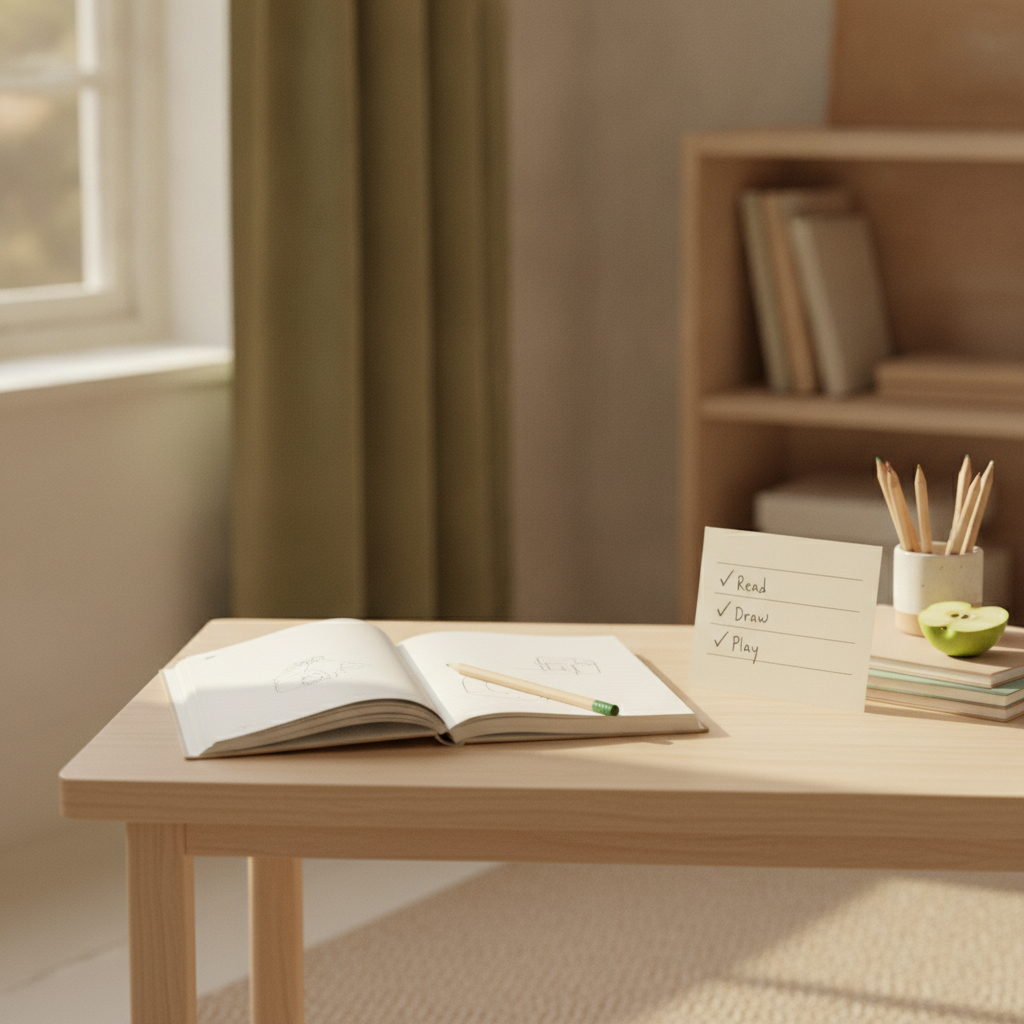
- A visible checklist he manages himself instead of me calling out what’s next.
- Review happens after the work is done, not during — mistakes get caught, but not interrupted mid-thought.
Where I Still Stay Close
New concepts still get taught together, no exceptions. Independence works for practicing something already introduced, not for figuring out something brand new alone — that’s just frustration wearing the costume of a “learning opportunity.”
If your child is somewhere in this stretch, our What a 5-6 Year Old Actually Needs to Learn at Home covers the stage right before this one, and the Ages hub has what comes after.
If you want a simple way to bring more of this into your week, grab our free guide below.