I need to say this clearly before anything else: my kids watch screens. Some afternoons more than I’d like to admit. “Screen-light” is not a promise that we live screen-free — it’s a description of the direction we lean, not a rule we’ve never broken.
I bring this up because the phrase gets misread as extreme, and that misunderstanding stops a lot of parents from even trying a lighter version of it. Here’s what “screen-light” actually looks like in a house with three kids and two working parents.
Screens Aren’t the Enemy — Passive Defaulting Is
The problem was never the screen itself. It was reaching for it as the automatic answer to boredom, tiredness, or a need for five quiet minutes. We didn’t remove screens — we removed the automatic reach, by keeping a few boring-but-inviting alternatives within arm’s reach instead.
What We Actually Changed
- Screens live in one shared room, never in bedrooms — visibility alone cut a lot of mindless use.
- No screens in the first hour after waking or the hour before bed — this mattered more for sleep than for anything else.
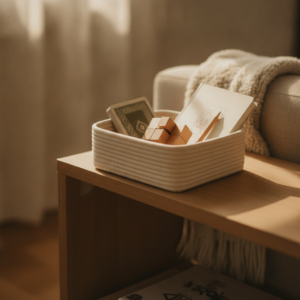
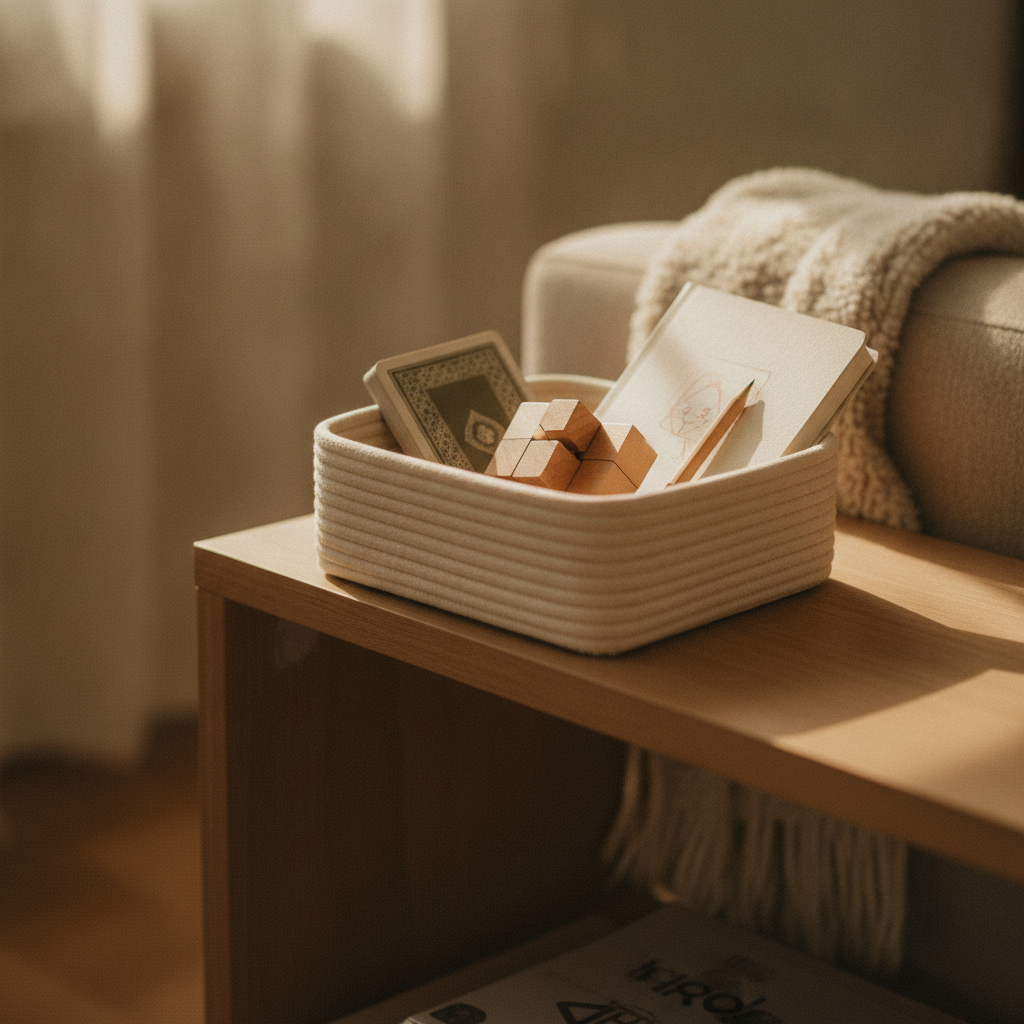
- A basket of “boredom fixes” — cards, a puzzle, a notebook — sits exactly where the remote used to.
- Screen time is a choice they make, not a reward or punishment I dangle — that alone reduced the daily negotiating.
The Days It Falls Apart
Sick days, travel days, the week I had a work deadline — screens fill in more on those days, and I’ve stopped apologizing for it internally. Screen-light was never meant to hold up perfectly under every condition. It’s meant to be the default we return to, not a rule we enforce without exception.
What Surprised Me Most
The hardest part was never the kids — it was me. Handing my phone over less often, in front of them, changed their habits faster than any rule I set for their screens ever did.
If this is a shift you’re working toward too, our Parenting hub has more on the routines that make this realistic, not extreme.
If you want a simple way to bring more of this into your week, grab our free guide below.