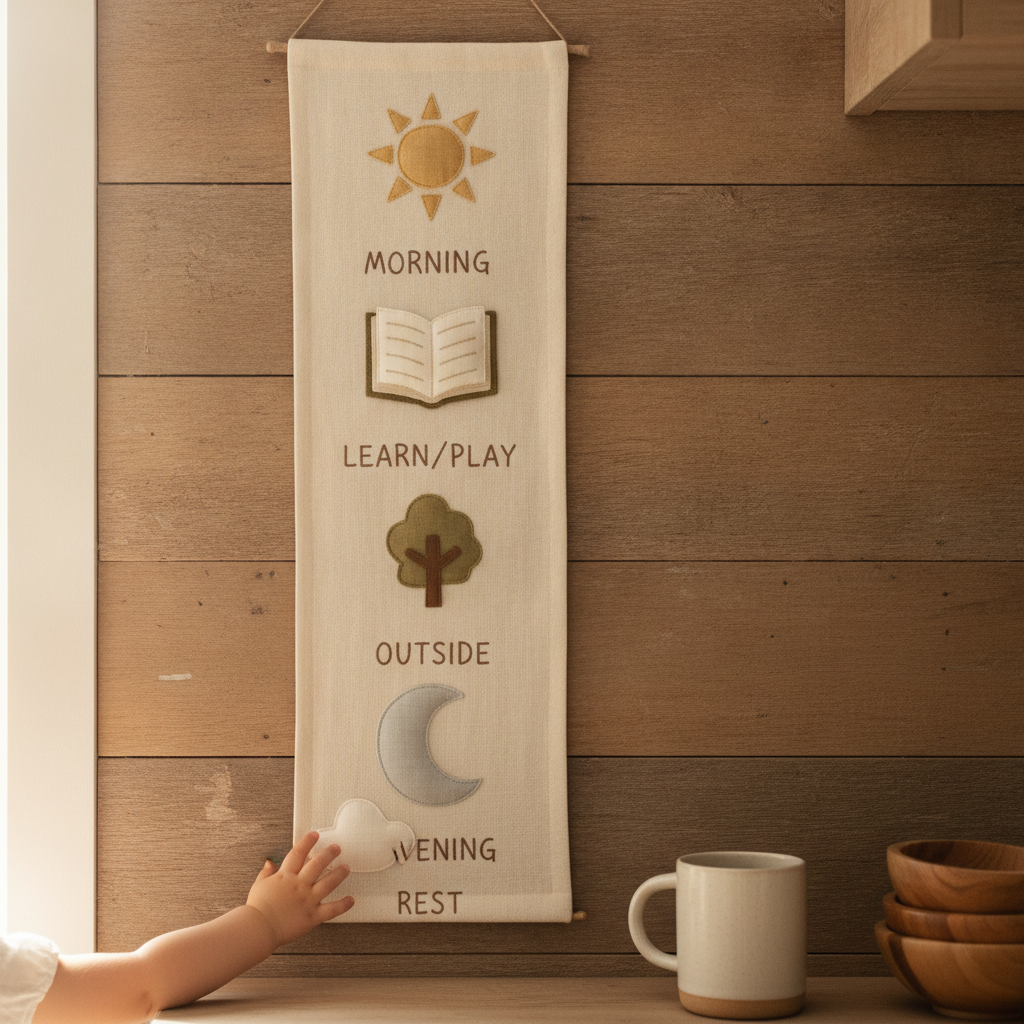
At two and three, homeschooling meant narrating the laundry and stacking the same blocks for the eleventh time. At nine, one of my daughters planned an entire ancient Egypt unit on her own, book list and wall timeline included. Those look like they need two completely different charts to explain. They don’t – they needed one framework that just gave different answers at different points.
A new milestone chart every year is exhausting to keep track of. A framework you return to isn’t.
Charts Reset Every Birthday; This Didn’t
I bought a full kindergarten curriculum box before I’d watched my oldest play for even a week at that age. It sat half-used in the closet by October, because it was built around a chart, not around her. A framework I understood well enough to apply myself would have told me to wait and watch first.
What Stayed the Same Across Three Kids
The specifics changed constantly – buttons sorted by color at four, spoons narrated into a twenty-minute imaginary battle, a math page finished faster the one day I walked away instead of hovering. But the underlying questions I needed answered at each age stayed remarkably stable across all three kids.
One Answer I Kept Coming Back To
By the third kid, I didn’t want to relearn what mattered at every age from scratch again. I wanted one consistent answer I could return to as each of them grew into the next stage.
That answer, for every stage from toddler to tween, is what ended up in The Age-by-Age Learning Roadmap – written so I’d stop reinventing it every birthday.
Our Ages hub has the framework broken out stage by stage, if you’d rather browse it that way first.
This is part of the Age-by-Age Framework.