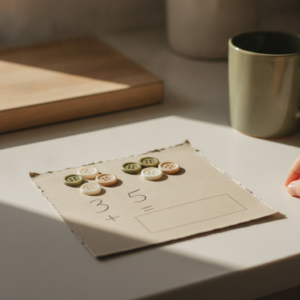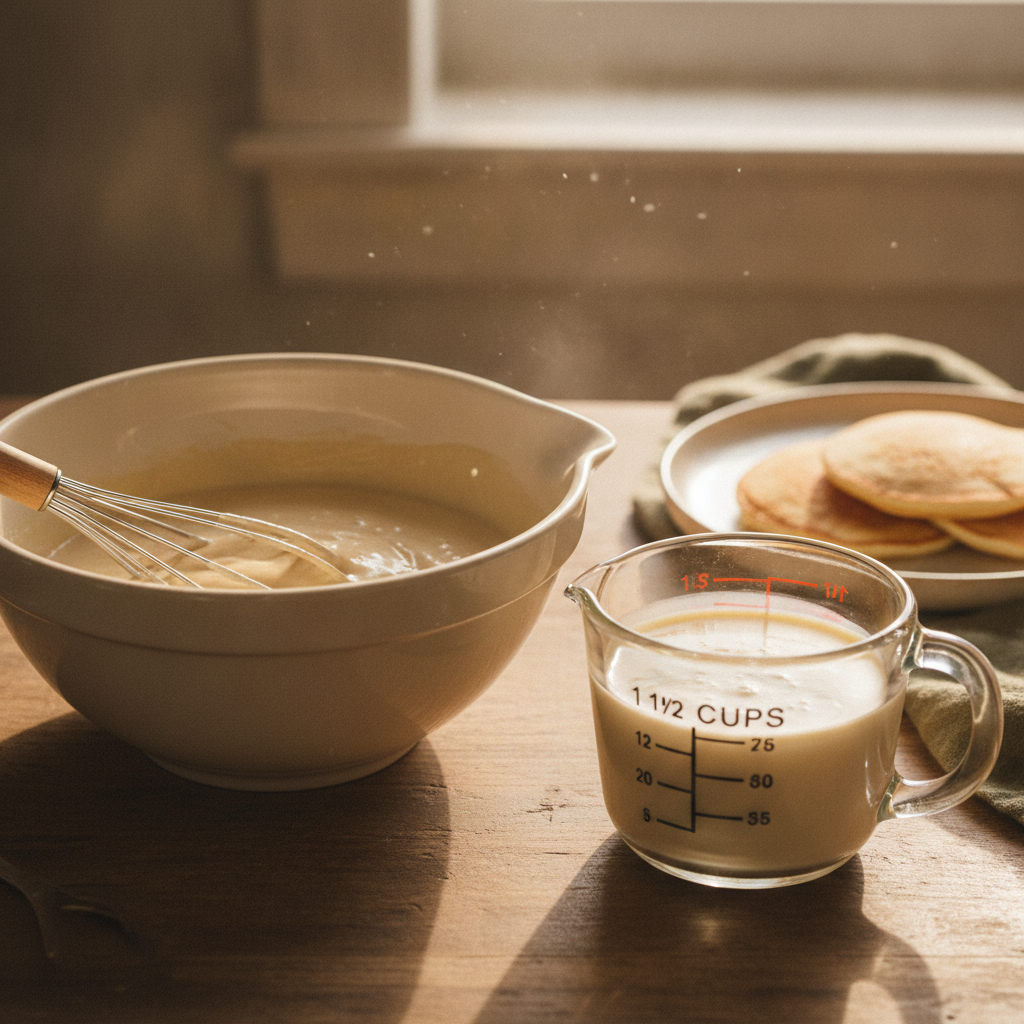
We doubled a pancake recipe last Sunday and my son, without being asked, worked out that three-quarters of a cup doubled meant one and a half cups before I’d even reached for a calculator. He’d never have gotten there from a worksheet. He got there from being hungry and wanting more pancakes.
Cooking has quietly become our most reliable math lesson, on a real weekly rhythm rather than an occasional special activity. Here’s exactly how that rhythm works.
Monday: Read the Whole Recipe First
Before touching an ingredient, we read the full recipe together and count the total steps and ingredients out loud. Simple counting and sequencing, but it sets up everything that follows.
Wednesday: The Doubling or Halving Day
We pick a simple recipe and either double or halve it on purpose, converting every measurement together before we start. This is where fractions stop being abstract and start being the thing standing between us and dinner.
Friday: The Guess-First Bake
Whatever we’re baking, we guess the result first — will it rise, how long will it take, how many will it make — then check. Estimation practiced against a real, checkable outcome sticks in a way abstract estimation never did.
The One Rule That Makes This Work
I never do the math for them, even when it’s slower. Watching a kid work out a fraction conversion with real stakes — the recipe won’t turn out right otherwise — builds more confidence than a correct answer handed over quickly.
What This Rhythm Actually Teaches
- Fractions and ratios, with real, tastable consequences for getting them wrong.
- Estimation, checked against a real result every single time.
- Sequencing and following multi-step instructions in order.
- Patience — some things just take the time they take, no matter how badly you want them done.
What Doesn’t Need to Be Perfect
We’ve had flat bread, over-salted soup, and one memorably inedible batch of cookies from a doubling mistake. Every one of those became a better math lesson than the recipes that turned out perfectly the first time.
For the philosophy behind this, our Cooking as Curriculum post goes deeper, and Making Math Make Sense covers the wider math approach.
If you want a simple way to bring more of this into your week, grab our free guide below.