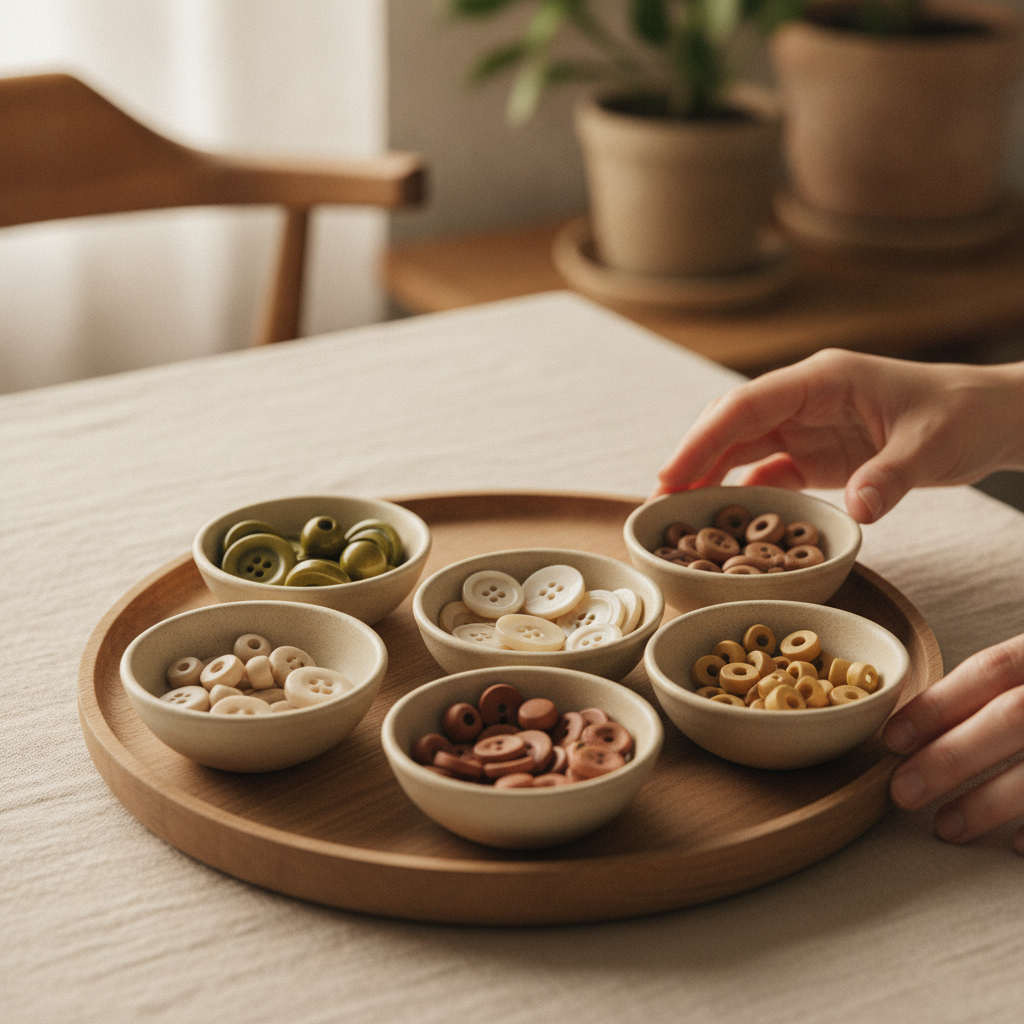
My youngest once spent a full week sorting every button, bead, and bottle cap in the house by color, with no assignment behind it, just a kid on the floor with a pile of small things and strong opinions about which ones belonged together. It didn’t take much to turn that same pile into a pattern lesson once the sorting phase wore off.
Patterns are just sorting with a rule about order added on top, and a junk drawer has everything you need for both.
Start With What’s Already Loose
Buttons, bottle caps, mismatched screws, rubber bands, paper clips – a junk drawer usually has at least three or four different small objects already mixed together, which is really all a pattern activity needs.
Simple Patterns First
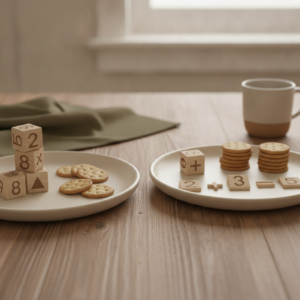
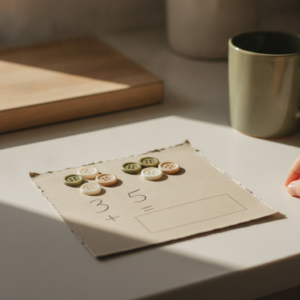
Button, cap, button, cap is a pattern. So is big button, small button, big button, small button. Starting with two objects and letting a kid predict what comes next builds the same skill a workbook pattern page is going for, just with things they can pick up and rearrange.
Let Them Build the Pattern, Not Just Continue It
Continuing a pattern someone else started is one skill. Inventing a pattern from scratch and explaining the rule out loud is a harder, better one, and it’s the difference between a kid who can finish a worksheet row and a kid who actually understands what a pattern is.
What Still Goes Wrong
The junk drawer pile inevitably ends up back in a jumble on the floor, and I have to talk myself into treating that as fine rather than a mess to fix immediately.
This is the same kind of no-kit, use-what-you-have lesson built into 30 Days of Hands-On Kindergarten Math, patterns included.
For more ideas that don’t require a shopping trip, see our Learning at Home hub.