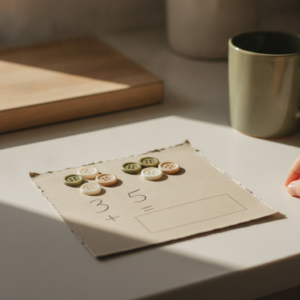
My daughter announced, with total confidence, that she “hated math” at age seven — before she’d even finished a single worksheet. What she actually hated was the worksheet. These are the games that quietly proved her wrong without ever mentioning the word “math” out loud.
Every one of these uses things already in a kitchen drawer, and none of them look like schoolwork while they’re happening.
1. The Fair Split
Split a snack unevenly on purpose, then ask “is that fair?” Division and fractions become urgent and personal the moment a sibling’s pile looks bigger.
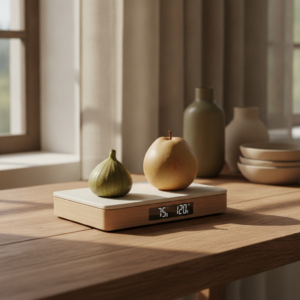
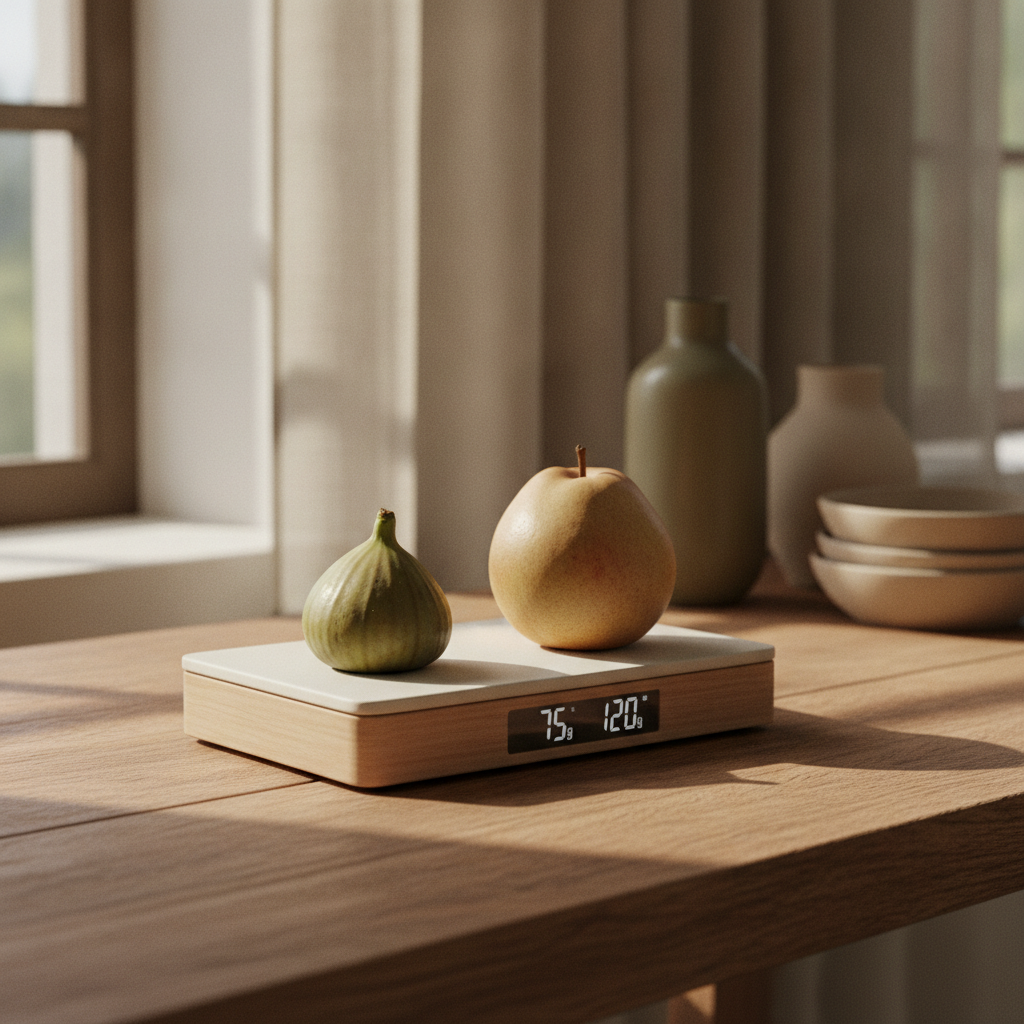
2. Guess the Weight
Hold two produce items, guess which is heavier, then check on a kitchen scale. Repeat with new pairs. Builds estimation and a real feel for measurement units.
3. The Doubling Game
Pick a simple recipe and double it together, out loud, ingredient by ingredient. Doubling fractions in a real recipe sticks far better than the same problem on paper.
4. Countdown to Empty
Count a stack of crackers down from a number out loud while eating them one at a time. Simple subtraction practice that never once feels like practice.
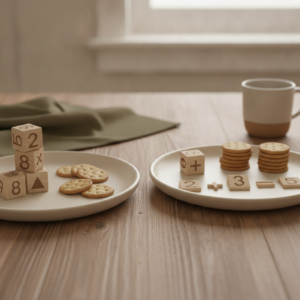
5. Pattern Plates
Arrange snack pieces into a repeating pattern on a plate, then have your kid guess what comes next before you place it. Builds the same skill as formal pattern worksheets, just tastier.
6. The Timer Race
Set a timer for a task — setting the table, sorting silverware — and guess how many seconds it’ll take before starting. Builds a working sense of time as a real quantity.
7. Grocery Bag Estimate
Before unpacking groceries, guess how many items are in the bag, then count together while unpacking. A simple, repeatable estimation habit that costs nothing to run weekly.
What Changed for Us
None of these replaced actual math instruction entirely, but they rebuilt her willingness to engage with numbers at all — which turned out to be the real obstacle, not her ability.
For the bigger philosophy behind this, our Making Math Make Sense post covers the rest of our approach.
If you want a simple way to bring more of this into your week, grab our free guide below.