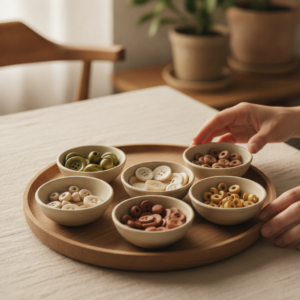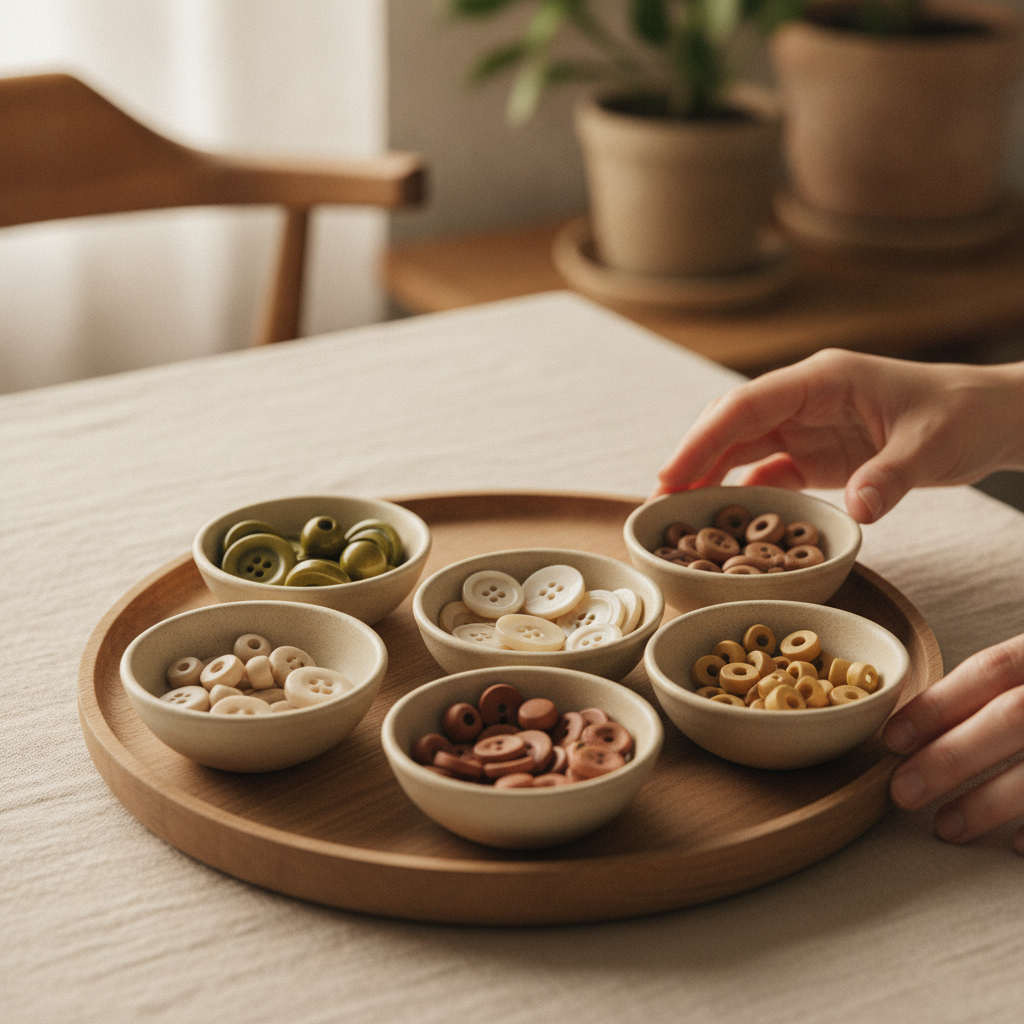
My youngest spent an entire week at four years old sorting every button, bead, and bottle cap in the house by color. No one asked her to. She just needed to, over and over, until one day she stopped and moved on to something else entirely.
Ages 4-5 is the year right before kindergarten, and it’s easy to spend it either drilling letters too early or assuming nothing “real” is happening yet. Neither is quite right. Here’s what actually mattered for us.
Sorting and Patterns Are the Real Math
That button-sorting week wasn’t a distraction from learning — it was the learning. Sorting, matching, and noticing patterns at this age build the foundation number sense sits on top of later. We stopped rushing past it toward counting worksheets and just let the sorting happen.
Letters Can Wait Longer Than You Think
We introduced letter sounds playfully — in songs, in “I spy” games — without any pressure to recognize them on a page yet. Some four-year-olds are ready to blend sounds into words. Many aren’t, and pushing it before the interest is there mostly just teaches a kid that reading is frustrating.
Following Multi-Step Directions Is the Real Milestone
Can they carry out two instructions in a row — “put your cup in the sink, then bring me your shoes” — without needing each one repeated separately? This mattered more for us at 4-5 than any academic marker, because it’s the actual skill every future lesson depends on.
Our Actual Rhythm
- Free sorting and pattern play, unprompted, most days.
- Letter sounds woven into songs and games, never a worksheet.
- Practicing two-step instructions during normal chores, not as a drill.
- Long stretches of pretend play — this did more for language development than any flashcard.
What We Didn’t Worry About
Writing her name legibly, sitting through a full lesson, or reading independently — none of that showed up yet, and none of it needed to. Fine motor control and attention span at this age still have real growing to do.
If your child is in this stretch, our What a 5-6 Year Old Actually Needs to Learn at Home covers the stage right after this one.
If you want a simple way to bring more of this into your week, grab our free guide below.