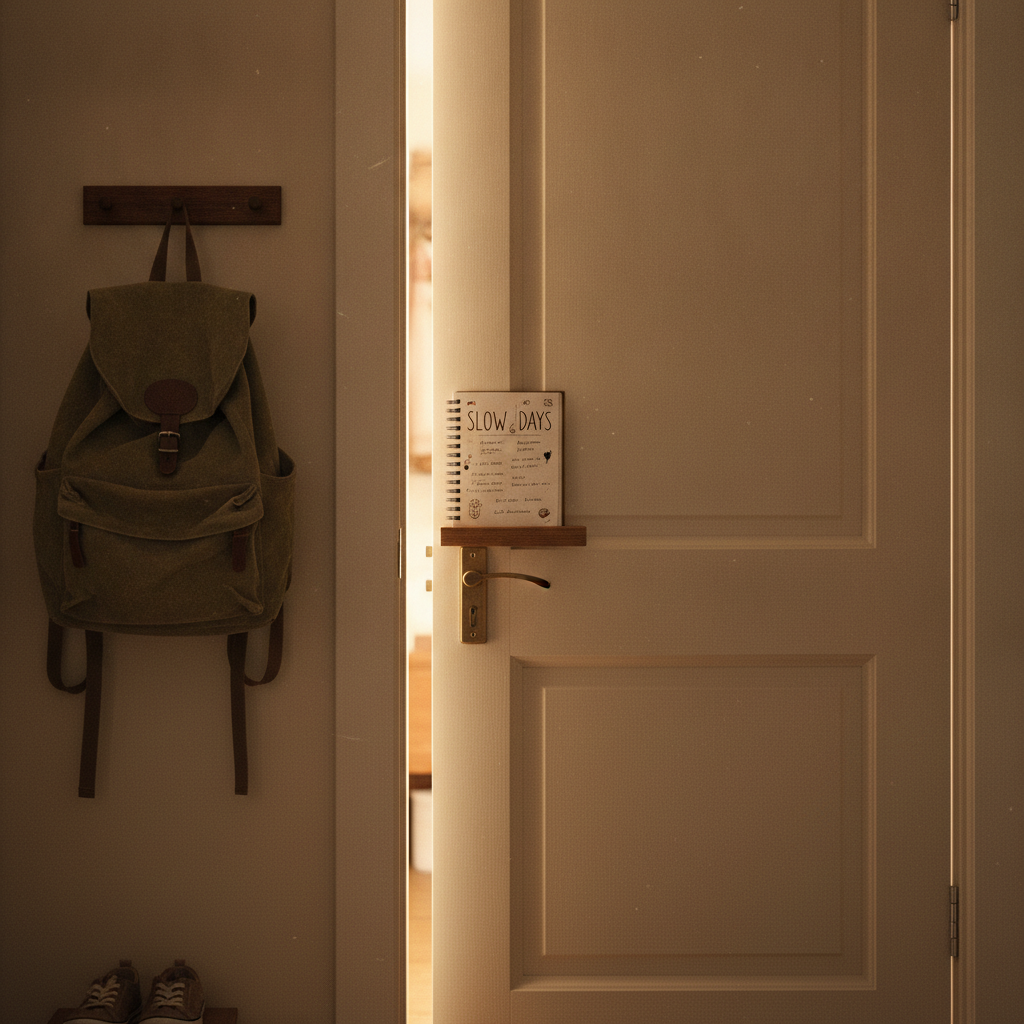
My oldest turned ten and, almost overnight, started closing her bedroom door to read instead of doing it on the couch next to me. It wasn’t distance exactly — more like the first real draft of the person she was going to become, testing out some privacy to go with it.
Ages 10-12 is the runway into the teenage years, and it’s easy to either rush kids into “middle school mode” too fast or keep treating them like they’re still eight. Here’s how we’ve tried to find the middle of that.
Give Them the Whole Assignment, Not Just Their Piece
Instead of breaking a project into daily chunks I hand out one at a time, we started giving the entire assignment up front — due in two weeks, and how she gets there is up to her. The first attempt was a mess of procrastination. The second attempt, a month later, was noticeably better. That mess was a necessary part of learning to manage it herself.
Let Them See the Real Stakes
At this age, we started being honest about actual consequences instead of softening everything. If a library book is late, she pays the fine from her own money. If a project isn’t done, she explains that to the person it was for, not just to me. Small, real stakes taught more than any lecture about “responsibility” ever did.
Privacy Is Practice for Independence
The closed bedroom door, the journal I don’t read, the friend conversations I’m not part of — these all started around this age, and I’ve let most of them stand. Practicing appropriate privacy now, while I’m still close enough to notice if something’s actually wrong, feels safer than her first taste of independence arriving all at once at eighteen.
Our Actual Approach to Middle School Prep
- Longer independent work blocks — up to 45 minutes, building toward what a real class period will feel like.
- A physical planner she maintains herself, not one I fill in for her.
- Real deadlines with real, proportionate consequences, decided in advance together.
- More say in what electives or extra subjects she adds — buy-in matters more here than it used to.
What We Try Not to Rush
Not every 10-12 year old is ready for the same amount of independence at the same time, and that’s fine. We watch for readiness signals — can they recover from a missed deadline without a meltdown, can they problem-solve before asking for help — rather than pushing based on age alone.
If your child is in this stretch, our The 8-10 Homeschool Stage covers what comes right before this, and the Ages hub has the full range.
If you want a simple way to bring more of this into your week, grab our free guide below.