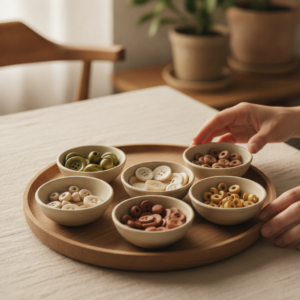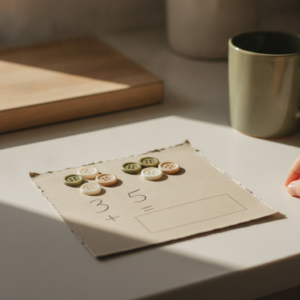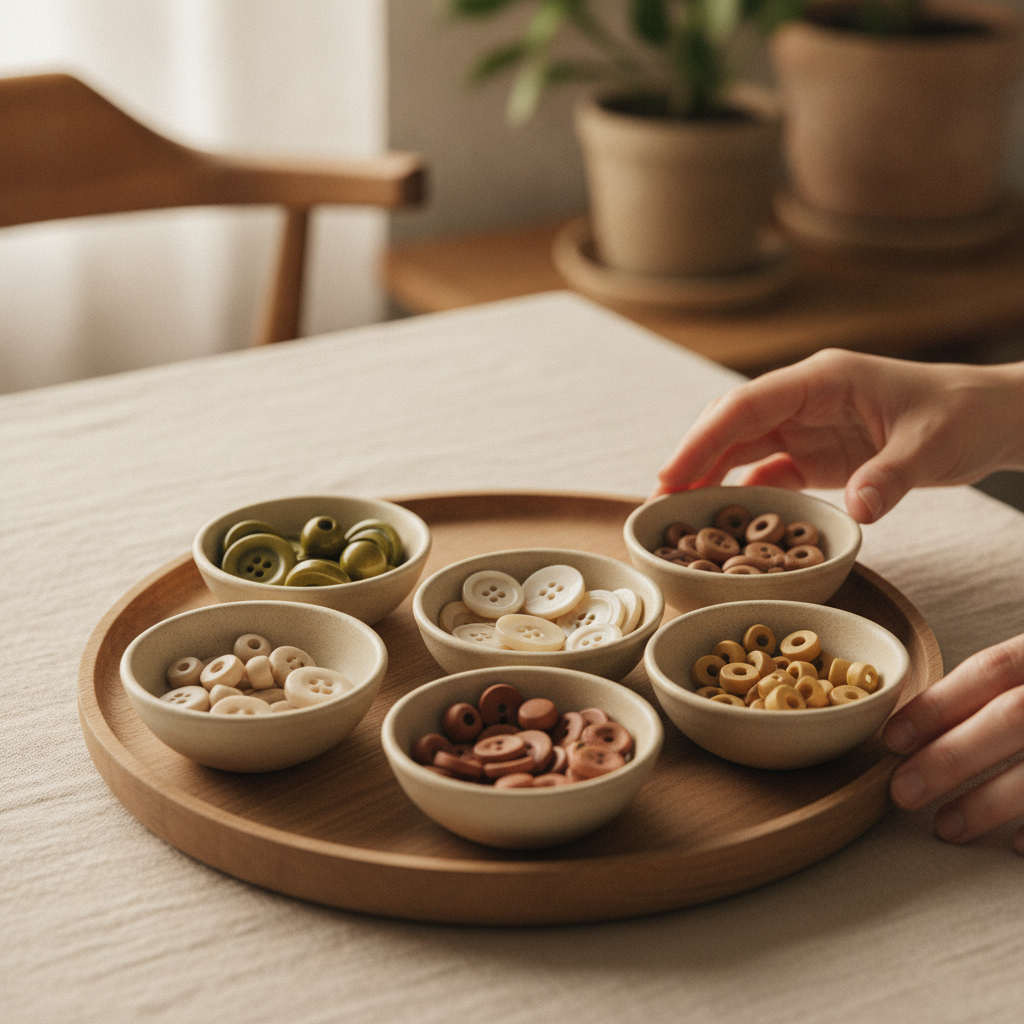
My youngest once spent an entire week sorting every button, bead, and bottle cap in the house by color – completely unprompted, no assignment, just a kid on the floor with a pile of small things and a sudden opinion about which ones belonged together.
I didn’t call it math at the time. It was just what she was doing that week. It took me longer than I’d like to admit to realize it was the exact math I’d been trying to teach with a workbook a year later.
Sorting Is the Real Math
Before numbers mean anything as symbols, kids need practice noticing what makes a group a group. Sorting by color, then re-sorting the same pile by size or shape, does more for that foundation than counting out loud ever did on its own.
It Doesn’t Need to Be a Kit
The junk drawer works. So does a sock drawer, a jar of buttons, or whatever’s already loose in a kitchen cabinet. We stopped buying sorting kits once we noticed the real version was already sitting around the house, free.
What We Still Get Wrong
I still catch myself reaching for a worksheet when a kid is stuck on a concept, out of habit, before remembering that a pile of mismatched buttons usually gets there faster.
This is exactly the kind of lesson that’s built into 30 Days of Hands-On Kindergarten Math – a full month of activities like this one, using things you already own instead of another workbook.
For more no-worksheet ways to teach the subjects that matter, our Learning at Home hub has the rest.