I used to buy the step-by-step art kits — the ones where you follow along and end up with something that looks exactly like the sample picture. My son finished one, looked at it, and said “it looks like yours” in a flat voice that took me a while to understand. He wasn’t proud. He’d just copied.
We stopped buying those kits. What replaced them was messier, slower to show results, and produced kids who actually wanted to keep making things.
Materials, Not Instructions
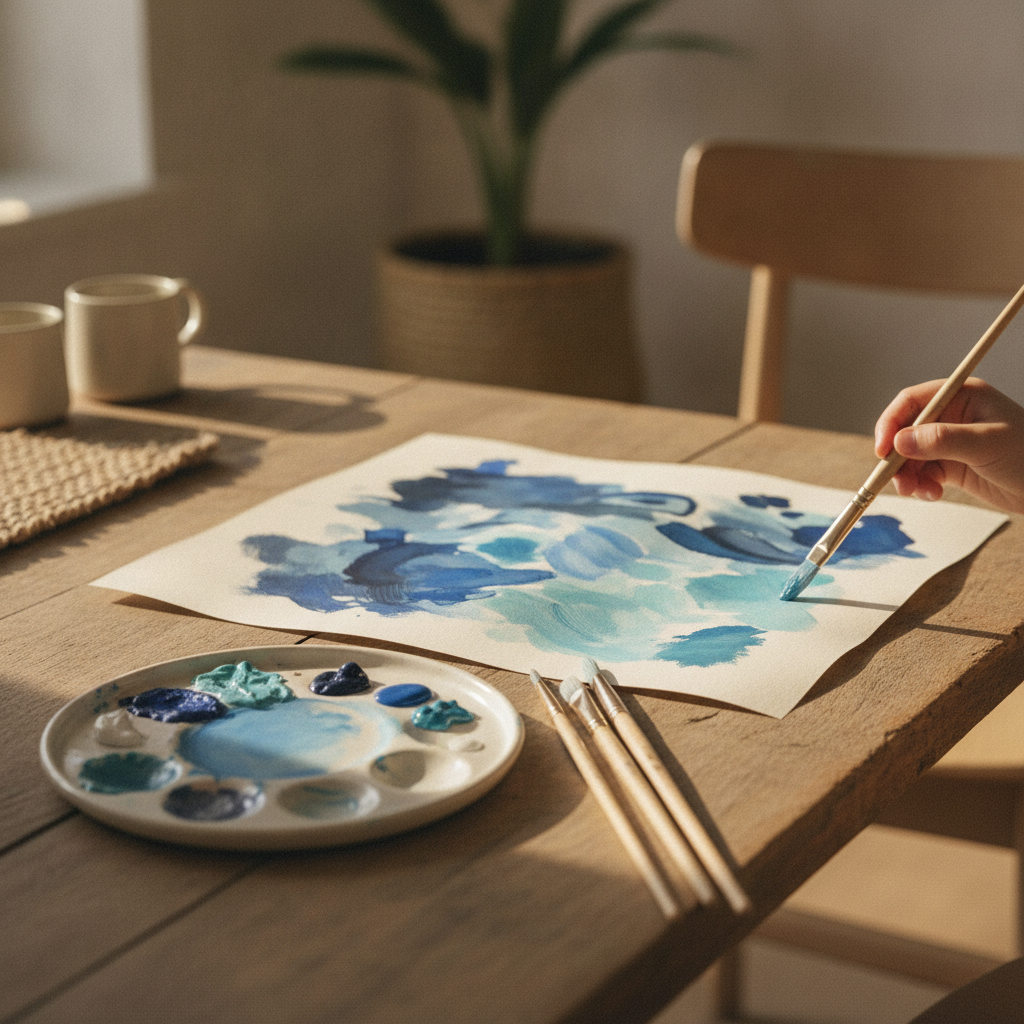
Instead of “here’s today’s art project,” we started just setting out materials — paint, paper, scissors, glue — with zero direction about what to make. The first few times were genuinely awkward; my kids kept asking what they were “supposed” to make. That question stopped being asked after about two weeks.
We Stopped Praising the Output
“That’s beautiful!” trained my kids to look at me for approval instead of looking at their own work. We switched to specific, process-based comments instead: “You used a lot of blue today” or “Tell me about this part.” It felt stiff at first, and it changed how much they talked about their own choices instead of waiting for a verdict.
Let Bad Art Happen
Plenty of what gets made in our house is, honestly, not very good by any adult standard. We don’t rescue it, fix it, or suggest “improvements” mid-project. A drawing that doesn’t look like anything recognizable is still doing its job if the kid making it was absorbed the whole time.
Our Actual Art Rotation
- Open painting — one color family at a time (all blues, all warm tones) to build some intention without a template.
- Collage from scraps — magazine pages, fabric, old drawings cut up and reassembled.
- Observation drawing — drawing something real in the room, not from imagination or a reference photo.
- Clay or playdough sculpture — no kiln, no permanence, just building and rebuilding.
Where Instruction Still Has a Place
We’re not against ever teaching a technique — learning to mix a specific color, or how to hold a brush for control, is a real skill worth showing directly. The difference is that instruction teaches a tool, then open materials are where that tool actually gets used.
For more on how we handle other subjects the same hands-on way, our Learning at Home hub has the rest.
If you want a simple way to bring more of this into your week, grab our free guide below.