My daughter announced she hated math before she’d finished a single worksheet. Looking back, she was right about the worksheet and wrong about math – she just hadn’t met the version of it that wasn’t on paper yet.
That’s roughly where we started when we committed to a full month of hands-on math instead of workbook pages, and it changed more than I expected it to.
The Rhythm We Settled Into
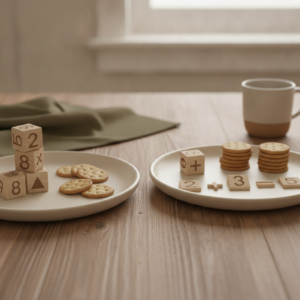
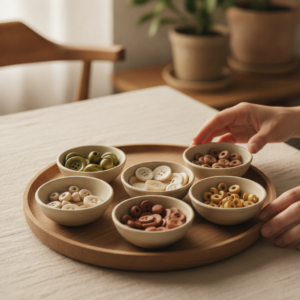
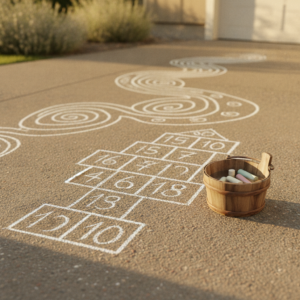
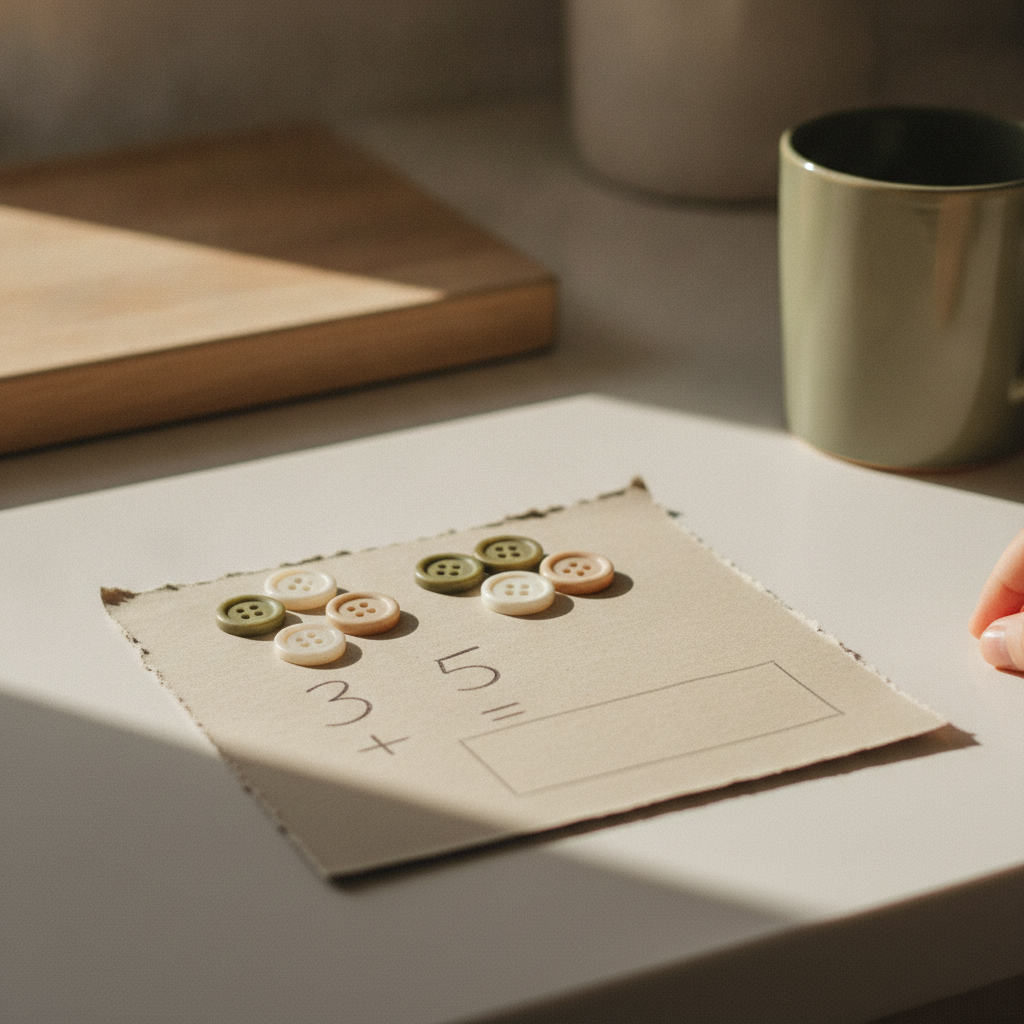
Most days ended up looking similar: counting real objects around the house, a shapes walk around the block, sorting socks into pairs, subtraction at snack time, and measuring steps to the mailbox. None of it took more than a few minutes at a time, and none of it required sitting at a table.
What Changed
The complaints about “hating math” mostly stopped, not because math got easier, but because it stopped looking like the thing she’d already decided she hated. Sorting socks doesn’t feel like math until you point out afterward that it was.
It Wasn’t All Smooth
Some days were just a walk with no counting, because everyone was too tired for it. A few days I fell back on a worksheet because it was faster than thinking up something hands-on. Thirty days of consistency did not mean thirty perfect days.
What I’d Tell Myself Before Starting
Lower the bar for what counts as a lesson. A shapes walk that takes ten minutes and ends with someone whining about being tired still counts.
That thirty-day rhythm is exactly what we ended up building into 30 Days of Hands-On Kindergarten Math, so other families don’t have to invent it from scratch the way we did.
More of what our days actually look like is on the Learning at Home hub.