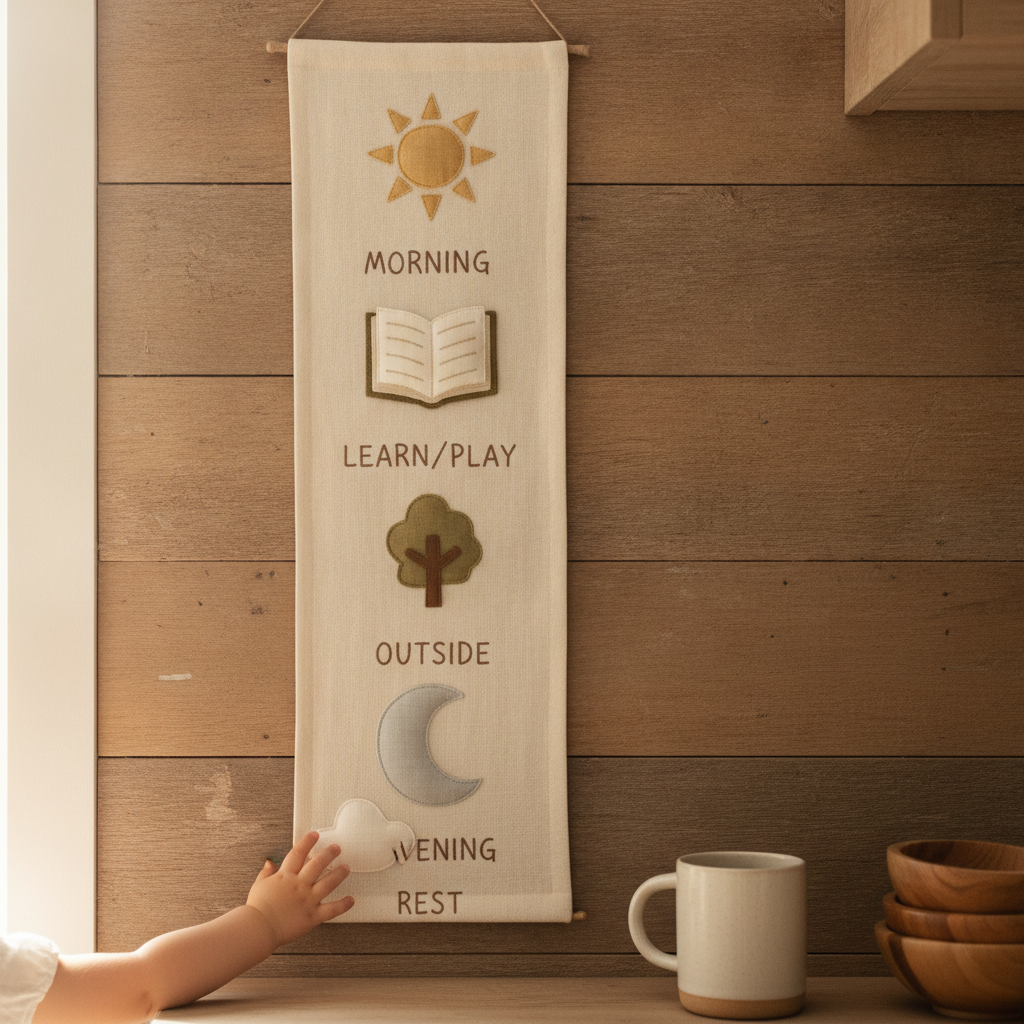
I used to picture a bad homeschool week as a dramatic thing – a full derailment, papers everywhere, everyone in tears. Our worst stretch actually looked quieter than that from the outside. Sickness, travel, and a broken washing machine landed in the same few weeks, on top of plain burnout, and the routine didn’t bend under any of it. It just stopped existing for a while. That’s what a genuinely bad week looks like here now: not chaos, just absence.
It Doesn’t Announce Itself
A bad week rarely starts with an obvious sign. It starts with one thing sliding, then another, until I look up and realize the anchor hasn’t happened in three days. Recognizing that slide earlier is most of what’s changed for me – not preventing hard weeks, just noticing them sooner.
The Buffer Block Absorbs the First Hit
We have a deliberately unassigned block in every day that soaks up whatever the morning already used. In a bad week, that block gets bigger and bigger until it’s most of the day, and I let it. That’s the block doing exactly what it’s for.
Recovery Looks Smaller Than People Expect
We don’t come back with a big reset day. We bring back the morning anchor first – fifteen minutes of reading together – and let that be enough for a few days before focused work returns. It’s a quiet recovery, not a dramatic one, and that’s exactly why it works.
Having a rhythm loose enough to absorb weeks like that – instead of a schedule that breaks the first time real life shows up – is the whole idea behind The Intentional Homeschool Planner.
More on how we rebuild after a hard stretch is on our Homeschool hub.
This ties into the Five-Block Rhythm.