My middle son narrated an entire imaginary battle between two spoons for twenty straight minutes at age three, complete with sound effects and a plot twist. I used to worry that this kind of play meant we “weren’t doing anything” that day. I know now it was doing more than almost anything I could have planned.
Ages 3-4 is easy to underestimate, because so little of it looks like traditional learning. Here’s what we’ve actually leaned into during this stage, across three kids.
Pretend Play Is the Main Subject
Extended imaginative play at this age builds language, sequencing, and emotional understanding faster than almost anything else we’ve tried. We started protecting long, uninterrupted blocks of unstructured play time instead of filling every hour with an “activity.”
Big Feelings Need Names, Not Just Consequences
Three and four is often when feelings get genuinely enormous and words haven’t caught up yet. We spent far more time simply naming feelings out loud — “you’re frustrated because the tower fell” — than on any formal lesson, and it paid off more.
Fine Motor Work Hides in Ordinary Tasks
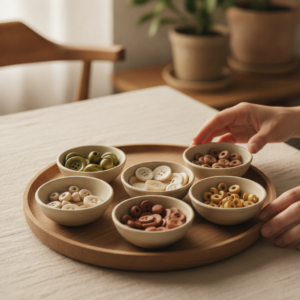
Pouring their own cereal, using child-safe scissors, buttoning a coat — these built hand strength and control more reliably than any worksheet with tracing lines. We handed over real, slightly messy tasks instead of practice sheets whenever we could.
Our Actual Rhythm
- Long blocks of unstructured pretend play, protected and uninterrupted.
- Real chores scaled down — pouring, sorting laundry by color, carrying light items.
- Naming feelings out loud, for both of us, especially during hard moments.
- Books read aloud multiple times a day, often the same one repeatedly by request.
What We Didn’t Push
Sitting still for a structured lesson, writing letters, or following instructions with more than one step reliably — none of it was there yet for most of this stage, and that was completely normal, not a sign of falling behind.
If your child is in this stretch, our Ages hub has what comes next.
If you want a simple way to bring more of this into your week, grab our free guide below.