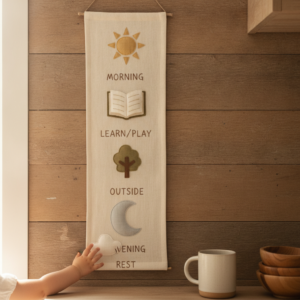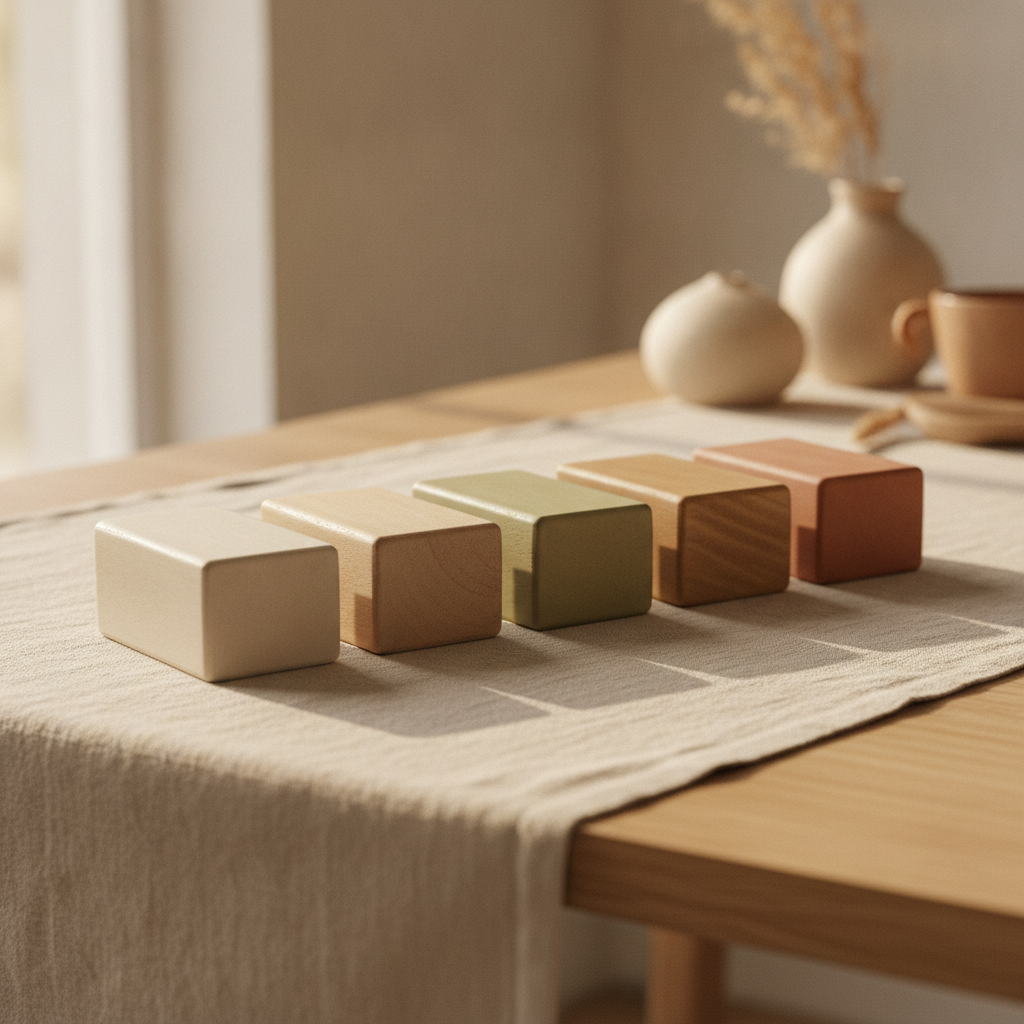
Our first family schedule had clock times on it. Math at nine, reading at nine forty-five, science at ten thirty. It lasted one day. A diaper blowout, a delivery at the door, and a full meltdown over the wrong-colored cup took the whole thing apart before ten in the morning. What replaced it is the structure we still use today, with three kids, years later: five loose blocks, no clock times attached to any of them.
This is the actual shape of it — what each block is for, and why five turned out to be the right number when eight or nine wasn’t.
The Five Blocks
- Morning Anchor. Fifteen minutes of reading together on the couch after breakfast. This is the one block that isn’t optional — everything else can move around it.
- Focused Work. The closest thing to “school” in the traditional sense — whatever needs concentration, done while attention is freshest.
- Movement. Outside, or at least out of the chair. Not a reward for finishing work — a fixed part of the day regardless of how work went.
- Rest. Genuinely unstructured. No reading requirement, no quiet activity assigned. Rest that has a job attached to it isn’t rest.
- Open Afternoon. Whatever the day actually needs by that point — more of something, none of something, or nothing at all.
Why Blocks Instead of Times
A clock-time schedule promises control — if you can name the exact minute something happens, it feels like you’ve solved the day in advance. What it can’t do is account for a sick kid, a missed nap, or a morning that starts wrong. A block only cares about order, not timing. It can shrink to ten minutes or stretch to an hour and the rhythm still holds, because nothing downstream is waiting on a specific clock number to start.
Why Five, Not More
We tried a more granular version once — eight or nine blocks through the day, each with its own narrow purpose. It collapsed within a week, for the same reason the clock-time schedule did: too many fixed points means too many places for a real day to knock the plan over. Five is few enough that losing one doesn’t take the rest down with it.
What Happens When a Block Gets Skipped
Nothing dramatic. If Movement doesn’t happen, Rest doesn’t inherit its job. If Focused Work is short because the morning ran long, Open Afternoon absorbs the difference. The rhythm was built to lose a block without losing the day — which is the entire reason it survives weeks a rigid schedule never could.
Where It Still Breaks
A truly bad stretch — the month we had sickness, travel, and a broken washing machine stacked on top of burnout — can knock out the whole rhythm, not just a block. For that, the Five-Block Rhythm hands off to a separate tool: the Reset Page, for when the day isn’t the problem, the week is.
The full block template, printable and ready to fill in for your own week, is inside The Intentional Homeschool Planner.
More on how we plan around this rhythm is on our Homeschool hub.