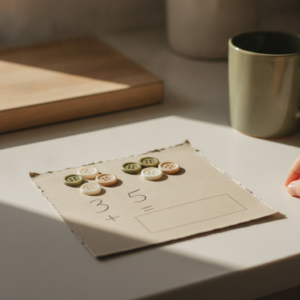
If you added up every dollar I’ve spent on math workbooks over the years, it would probably buy a decent set of kitchen knives. If you added up how many of those workbooks got finished, you’d be looking at a much smaller number, closer to zero.
Meanwhile the actual kitchen — the one we cook in every day — has quietly done more for math than any of it. Here’s what keeps earning its spot.
Measuring Cups
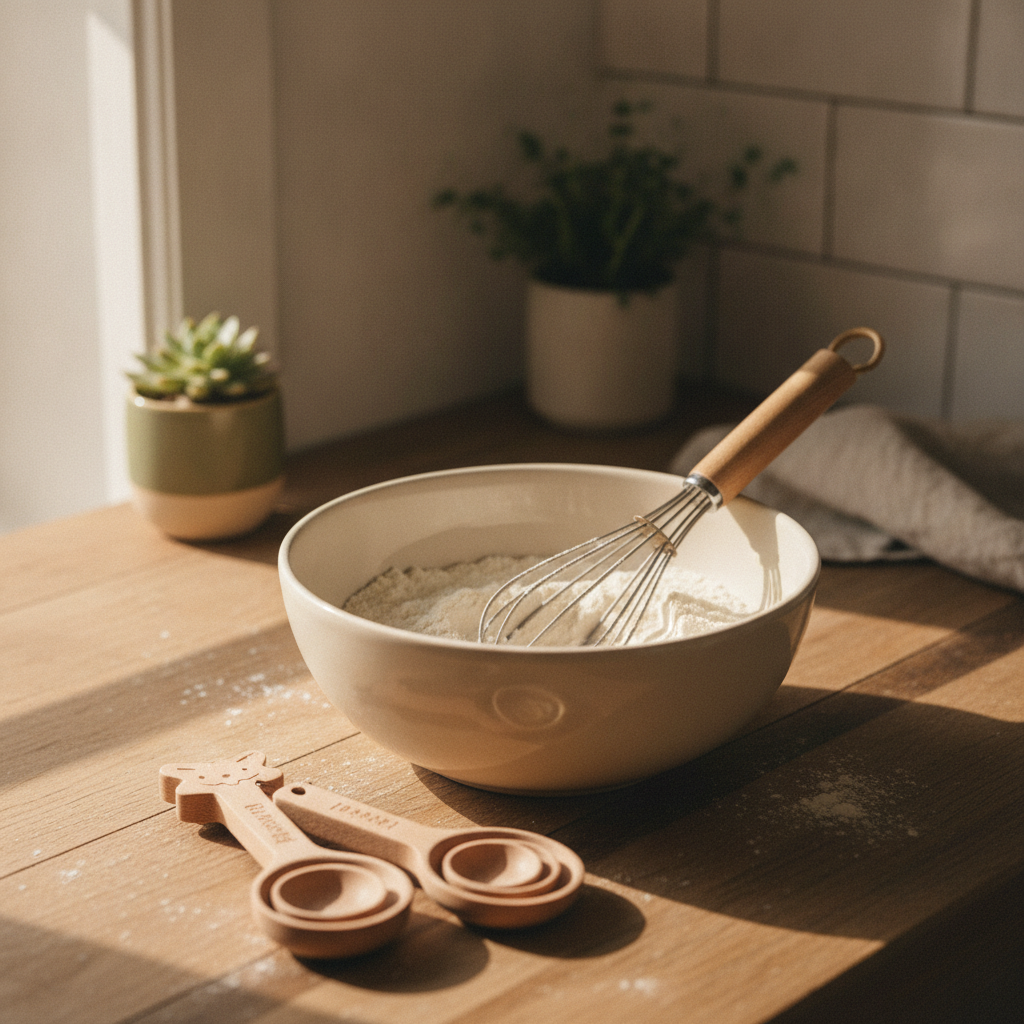
Doubling a pancake recipe means doubling every ingredient, and fractions stop being abstract the second a kid has to figure out what three-quarters of a cup becomes when you need twice as much. Last Sunday my son worked that one out loud before I’d even reached for a calculator.
A Kitchen Timer
Counting down minutes, splitting a cook time in half, figuring out what time something needs to go in so it’s ready by dinner — a timer turns into a clock lesson without anyone announcing that’s what’s happening.
A Mixing Bowl and Snack
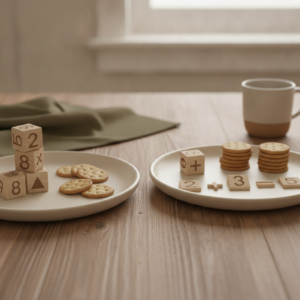
We do a lot of subtraction at snack time, mostly because it’s the one moment of the day everyone is already sitting still. Six crackers on a plate, two eaten, how many left — no worksheet required.
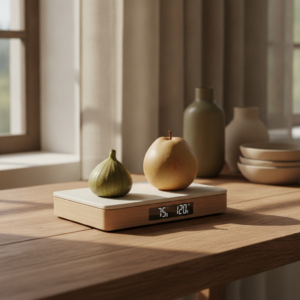
A Kitchen Scale
Weighing ingredients instead of just measuring them adds a whole other layer, especially once a kid notices that a cup of flour and a cup of sugar don’t weigh the same. That question is worth more than a page of comparison problems.
What I Still Get Wrong
I still buy the occasional workbook out of habit, usually right after a rough math day, and it usually sits there while dinner prep quietly does the actual teaching.
This kind of everyday, already-in-your-kitchen teaching is the whole idea behind 30 Days of Hands-On Kindergarten Math — a month of activities built around things you already own.
More no-worksheet ideas live on our Learning at Home hub.