After we dropped the boxed curriculum, kindergarten math became a genuinely weekly rhythm rather than a daily worksheet — one that’s still recognizable, three kids later, as the backbone of how we teach early math now.
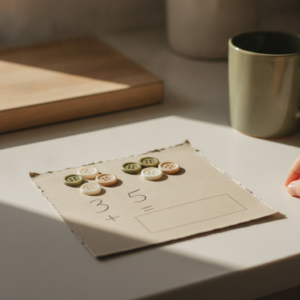
Monday: Counting With Real Things
Snacks, buttons, toys — anything countable, counted out loud together. This stayed the anchor of every single week that year, the one thing that never got skipped even on our loosest days.
Tuesday: Shapes in the Real World
A walk around the house or yard, naming shapes we actually saw — a round clock, a rectangular door. No worksheets, no shape flashcards, just noticing.
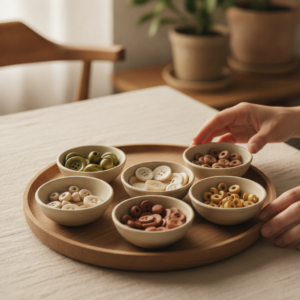
Wednesday: Patterns and Sorting
Socks by color, silverware by type, anything sortable in the house that day. Sorting turned out to matter more for early math than counting alone ever did.
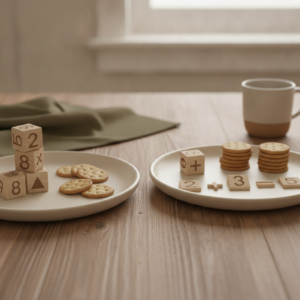
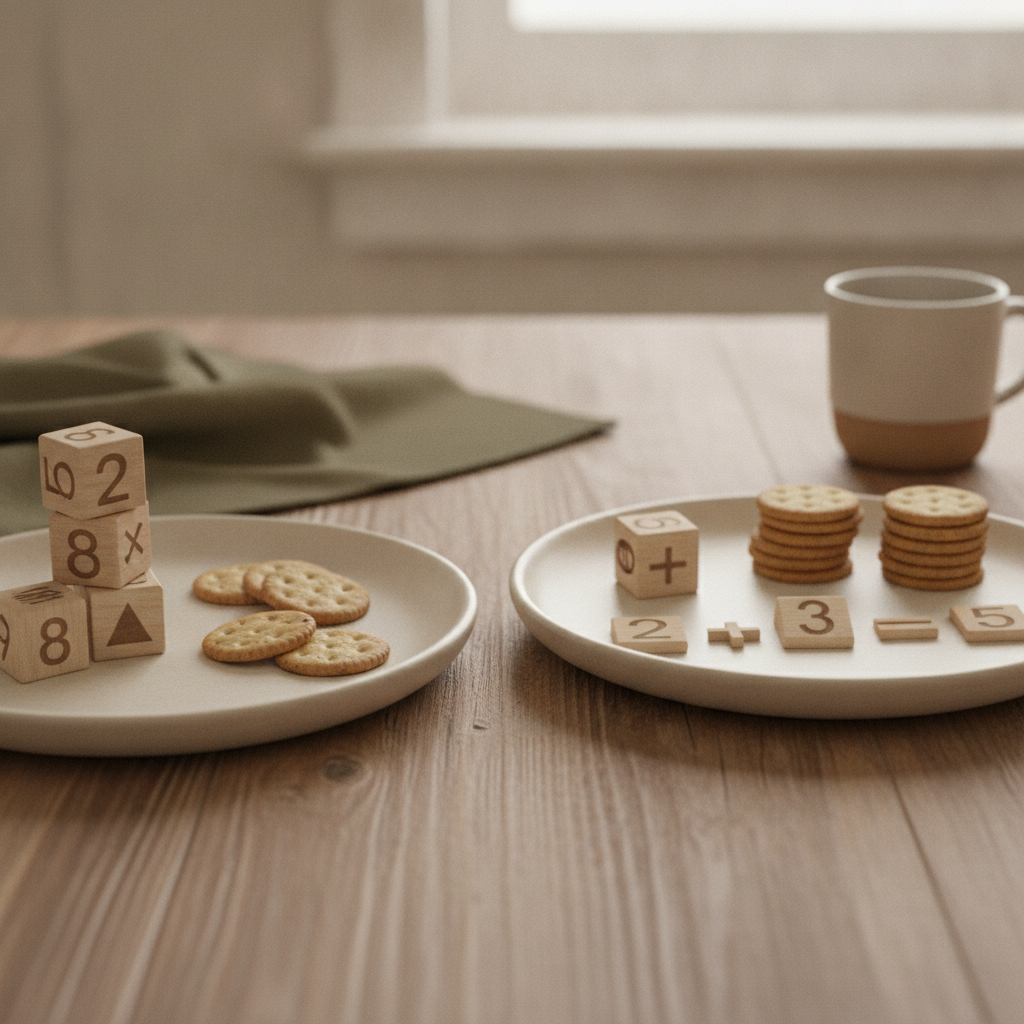
Thursday: Simple Addition and Subtraction, With Snacks
Splitting crackers between plates, then asking what happens if we eat one. Every equation had something edible attached, which made the stakes feel real instead of abstract.
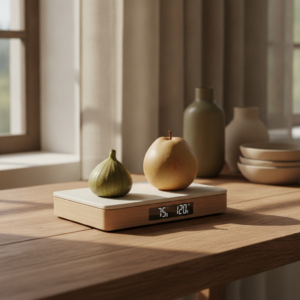
Friday: Measuring Whatever We Were Curious About
How many steps to the mailbox, how much water fills a cup versus a bowl. Loose, curiosity-driven measuring instead of a structured lesson closed out the week.
Why This Rhythm Outlasted the Curriculum Box
It cost nothing, needed no advance prep, and never once produced a morning of tears. Three years and two more kids later, this same rough shape is still what we reach for at this age, adjusted slightly each time but never abandoned.
For the full 30-day version of this rhythm, our 30 Days of Hands-On Kindergarten Math guide lays out every single day, and our Kindergarten Homeschool post covers the rest of the year.
If you want a simple way to bring more of this into your week, grab our free guide below.