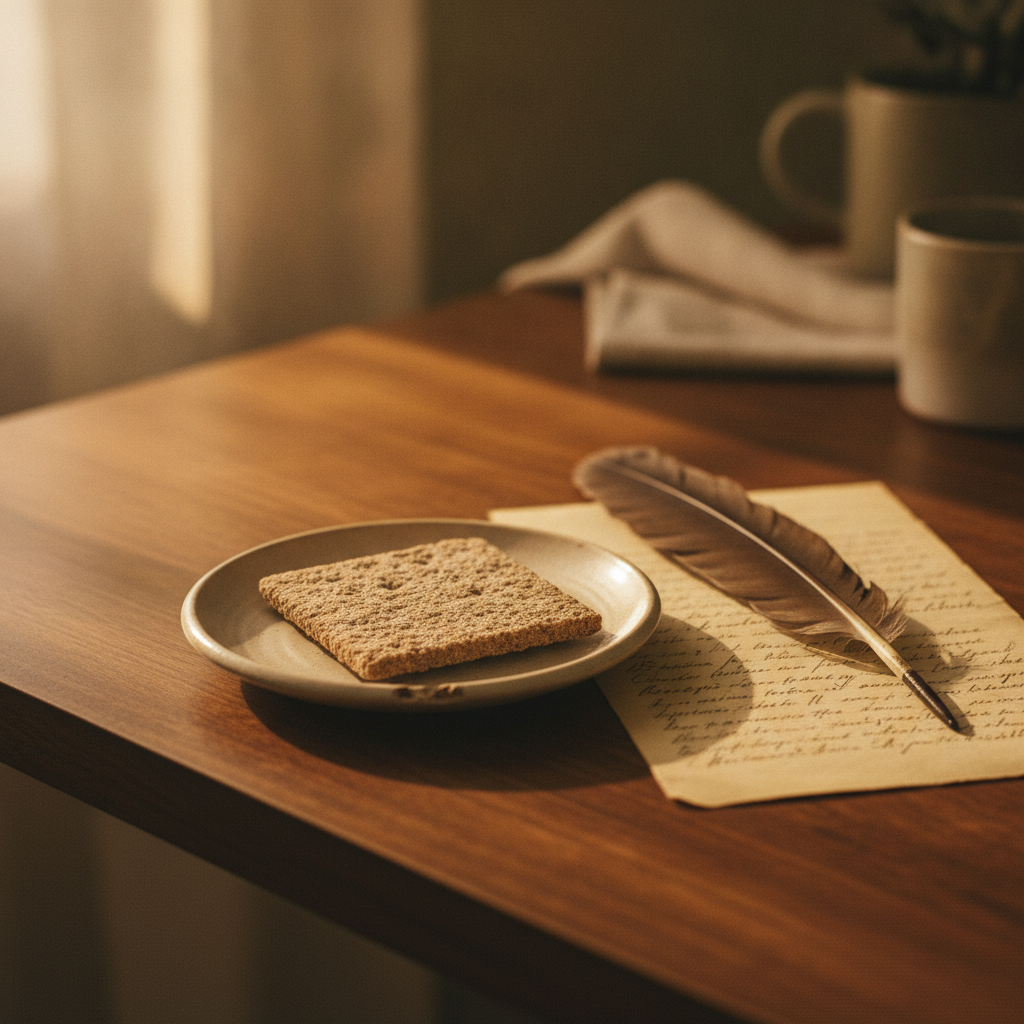
We made hardtack once — the dense, awful cracker soldiers ate during the Civil War — just to understand why letters home from that era complained about food so much. It was terrible. My kids still remember exactly why it was terrible, four years later, better than they remember most things from an actual textbook chapter.
History was the subject I worried about most before we started homeschooling — dates and names felt impossible to make interesting. What actually worked had almost nothing to do with dates.
Living Through It Beats Memorizing It
Cooking a period-appropriate meal, writing a letter the way someone from that era might have, or acting out a decision a historical figure faced taught more than any timeline. The goal shifted from “know the facts” to “understand what it might have felt like,” and the facts mostly stuck along the way.
One Person’s Story, Not the Whole Era
Instead of trying to cover an entire time period, we follow one real person through it — a specific soldier’s letters, one immigrant family’s journey. A whole era is too abstract for a kid to hold onto. One real story with a name attached isn’t.
We Read the Complicated Parts Too
It would be easier to stick to the comfortable version of any historical period. We don’t, on purpose. Kids notice when a story is being softened, and the harder, more honest parts are usually what make history feel real instead of like a fairy tale with dates attached.
Our Actual Approach
- One time period at a time, explored for several weeks instead of skimmed in a day.
- A hands-on project tied to it — a recipe, a craft, a letter written in character.
- Primary sources when we can find age-appropriate ones — real photos, real letters, real objects.
- A timeline on the wall that grows slowly across the whole year, not memorized all at once.
What We Skip
Rote memorization of dates with no story attached. If a date matters, it earns its place because we already care about what happened, not the other way around.
For more on how we handle other subjects the same hands-on way, our Learning at Home hub has the rest.
If you want a simple way to bring more of this into your week, grab our free guide below.