My middle daughter didn’t want to read. Not “struggled with it” — actively avoided it, closed books mid-page, and once hid a reader under the couch cushion so we’d “forget” about it. For a family that puts “Learning at Home” on the front of our website, that felt like a small crisis.
What actually turned it around wasn’t a better phonics program. It was dropping the idea that reading practice has to look like a lesson at all.
We Stopped Grading the Reading
For months, every reading session ended with me correcting a word she’d misread. It made her tense before we even opened the book. We switched to a rule: I only help if she asks. Otherwise I just listen, even through mistakes. Within two weeks, she was choosing books on her own again — not because the words got easier, but because reading stopped feeling like a test.
Read-Aloud Still Counts — Even at Age 8
We kept reading aloud to her long after she could technically read on her own, and I used to feel guilty about that, like I was letting her avoid the “real” work. What I’ve since learned is that listening comprehension develops faster than decoding skill at this age — so hearing chapter books above her reading level kept her love of story alive while her own skills caught up underneath it.
The Book Basket Rule
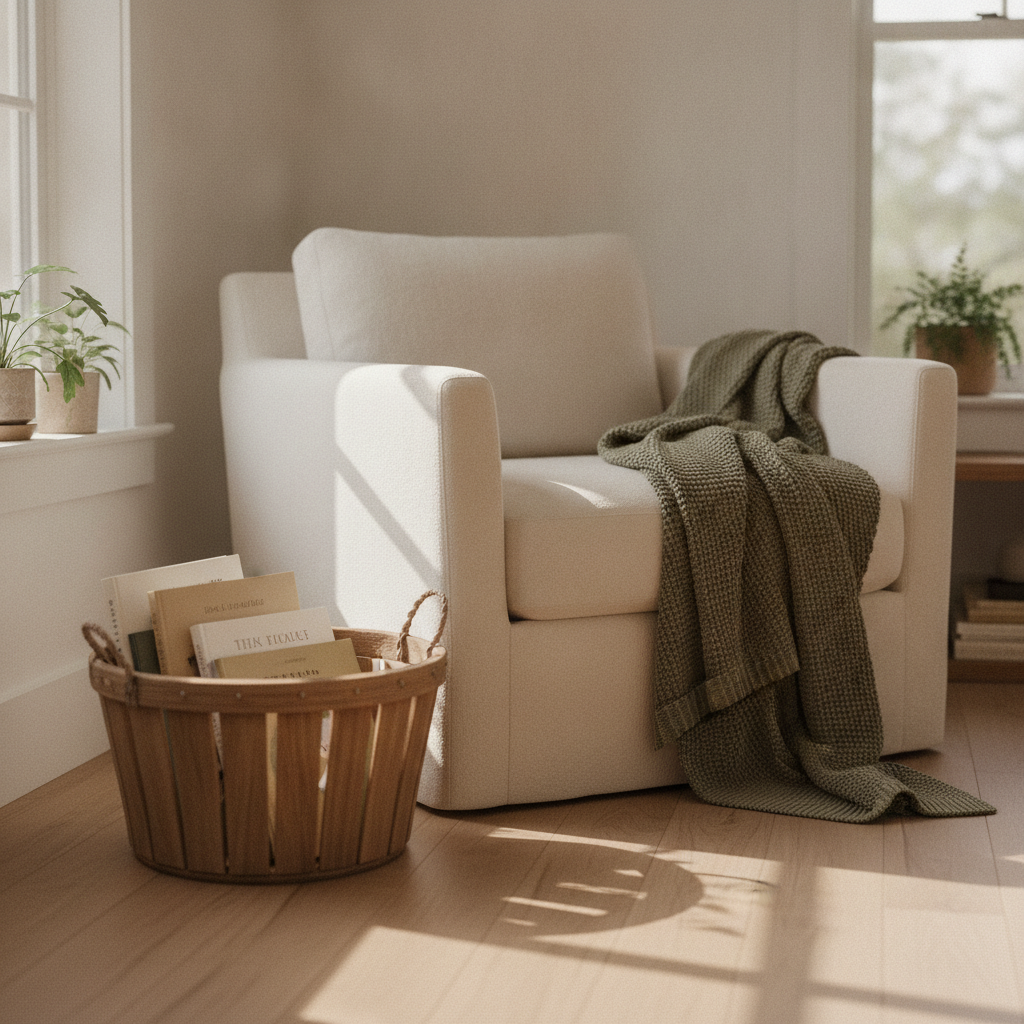
We keep a rotating basket of 8–10 books in the living room, swapped out every couple of weeks from the library. No shelf, no bookcase — just a basket at kid height, close enough to grab without asking. Removing the extra step of “go find a book” turned out to matter more than any single title we picked.
What We Actually Track
We don’t track words-per-minute or reading level scores. The one thing I do watch is whether she’s choosing to pick up a book on her own between our sessions. That single, unscientific signal has told us more about whether something is working than any assessment ever has.
If your child is somewhere in this same stretch, our Learning at Home hub has more on how we approach subjects without turning the kitchen table into a classroom, and Kindergarten Homeschool: What They Actually Need to Learn This Year covers the earliest reading-readiness stage if you’re a step behind this one.
If you want one simple way to bring more of this into your week without adding another program to buy, grab our free guide below.